
Introduction
When travelers search u.s. visa changes 2026, they’re rarely looking for a history lesson. They want to know one thing: “Am I still traveling, or do I need a new plan?”
In the past few weeks, two separate developments have driven most of the confusion:
- Presidential Proclamation 10998 took effect January 1, 2026, and the State Department says it suspends or limits entry and visa issuance for nationals of 39 countries (plus certain travel documents endorsed by the Palestinian Authority).
- On January 14, 2026, news outlets reported the State Department announced a suspension of immigrant visa processing for citizens of 75 countries, effective January 21, 2026, with reporting that it does not apply to nonimmigrant visas like temporary tourist/business visas.
This guide stays practical: how to check what applies to you, what “affected” actually means in airport terms, and what to do next without getting pulled into rumor lists and screenshot panic.
Key Points
- u.s. visa changes 2026 is not one single rule; it’s a mix of entry restrictions, processing pauses, and appointment capacity.
- Proclamation 10998 is already in force (effective January 1, 2026), with State Department guidance on entry/visa issuance limits for 39 countries.
- The widely shared phrase “visa processing suspended 75 countries” traces to reporting about an immigrant visa processing pause starting January 21, 2026.
- Your allowed stay after entry is shown on your I-94 “Admit Until” record, not on the visa foil in your passport.
- For short trips, the Visa Waiver Program (VWP) still runs through ESTA and caps stays at 90 days for eligible travelers.
What “u.s. visa changes 2026” usually means in real travel terms
One-line overview: Most travelers feel policy shifts as delays, extra checks, or a changed eligibility path.
- “Changed” can mean entry restriction (you can’t board or you’re refused at a visa stage) or processing slowdown (your interview date moves out).
- Viral lists move faster than official guidance. Your anchor sources are State Department pages, CBP pages, and Federal Register text when a proclamation is involved.
- If you’re planning ground transport (airport pickup, hotel arrival), treat immigration uncertainty like weather: build a buffer and don’t stack tight commitments.
What changed at the top level in 2026
One-line overview: Two items are driving most searches for u.s. visa changes 2026 right now.
- Proclamation 10998 (entry and visa issuance limits): State Department guidance says it suspends or limits entry and visa issuance for nationals of 39 countries, effective January 1, 2026.
- Immigrant visa processing pause reported for 75 countries: Reuters and AP reported a State Department action beginning January 21, 2026, described as suspending immigrant visa processing for citizens of 75 countries (with reporting that nonimmigrant visas like tourist/business visas are not covered).
- These are separate. One is a proclamation-based restriction framework; the other is reported as a processing suspension tied to immigrant visa categories.
Fast clarity table: “restriction” vs “processing pause”
One-line overview: Use this to stop the most common misunderstanding.
| Topic | What it affects | Who feels it first | What you check |
|---|---|---|---|
| Proclamation 10998 visa issuance / entry limits | Eligibility for entry/visa issuance under listed conditions | Travelers trying to board, apply, or renew under affected categories | State Dept guidance + proclamation text |
| “visa processing suspended 75 countries” (reported) | Reported pause in immigrant visa processing beginning Jan 21, 2026 | Families/employment-based immigrant applicants waiting on processing | Credible reporting + embassy notices when posted |
| Interview wait times | Appointment availability by post | Most nonimmigrant applicants | Global Visa Wait Times tool |
“Travel ban 2026 countries” and Proclamation 10998: what it actually says to do
One-line overview: Skip the social list, start with the official guidance and effective date.
- State Department’s page on Presidential Proclamation 10998 says it took effect January 1, 2026 and involves suspending or limiting entry and visa issuance to nationals of 39 countries, plus certain Palestinian Authority travel documents.
- CRS (Congressional Research Service) summarizes who is included and how the restrictions apply, in plain language, with the key date baked in.
- The Federal Register hosts the proclamation text. If you’re a “read the primary source” traveler, that’s the cleanest reference.
What to do next if you think this applies to you
- Check whether you are a national of a listed country and whether your travel dates/visa status match the conditions described in guidance.
- If you have a visa already issued, look for how existing visas are treated in the proclamation text and State guidance (don’t assume a visa equals entry).
- If your case is complicated (dual nationality, prior visa, parole, humanitarian category), talk to a qualified immigration attorney; this post is operational guidance, not legal advice.
If you’re traveling soon: figure out your “traveler bucket” first
One-line overview: Your next move depends on whether you travel on ESTA/VWP, a B1/B2, or something else.
- Bucket 1: Visa Waiver Program traveler (ESTA)
- Bucket 2: Nonimmigrant visa traveler (tourist/business like B1/B2)
- Bucket 3: Immigrant visa applicant (family/employment-based)
- Bucket 4: Already admitted; you need to confirm your allowed stay (I-94)
Bucket table: the first check that saves time
One-line overview: One check beats ten browser tabs.
| Bucket | Your first check | Tool |
|---|---|---|
| VWP/ESTA traveler | ESTA authorization + VWP rules | ESTA site + CBP VWP page |
| Nonimmigrant visa applicant | Interview wait time for your consulate | State Dept wait times tool |
| Immigrant visa applicant | Official notice from your post / CEAC updates | CEAC status + embassy instructions |
| Already in the U.S. | I-94 “Admit Until” date | I-94 site + CBP I-94 guidance |
Visa Waiver Program: what’s stable, what travelers get wrong
One-line overview: VWP is still a fast path for eligible travelers, but the rules are strict.
- CBP describes the VWP as allowing citizens of participating countries to travel for business/tourism for up to 90 days without a visa.
- ESTA is the authorization gate; CBP notes ESTA authorization does not decide admissibility, CBP officers decide that on arrival.
- If your ESTA is denied, the next step is usually a visa application; repeated “try again” behavior often wastes time.
Tourist/business visas: the B1/B2 timing trap people keep stepping into
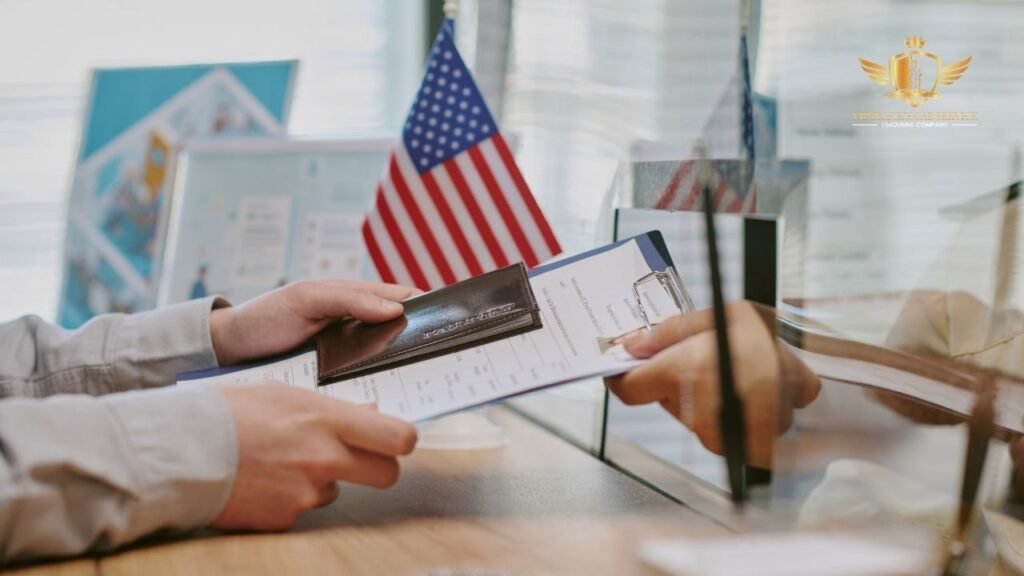
Visa validity is not the same as your authorized stay in the U.S.
- Your authorized stay is recorded on your I-94 arrival/departure record. CBP explains you can access your arrival/departure record online as proof of status.
- The “Admit Until” date on I-94 is what matters for overstay risk.
- If your I-94 is “Not Found,” CBP provides troubleshooting steps (name format, document number, etc.).
I-94 check table: what to screenshot for your files
This is the clean paper trail that helps later.
| Item | Why you save it | Where |
|---|---|---|
| I-94 record page | Proof of lawful admission + “Admit Until” date | i94.cbp.dhs.gov |
| Travel history (if needed) | Helpful for compliance questions | I-94 site tools |
| Passport bio page scan | Name/number matching for I-94 lookup | Your own files |
The bottleneck that moves week to week: interview wait times
Appointment timing is local, staffing-based, and variable.
- State Department’s wait-time page explains interview wait time estimates are based on workload/staffing and can vary week to week.
- If you’re booking business travel, plan from the wait-time tool outward—don’t book a hard date then hope the interview appears.
- If you’re part of a family trip, keep documents ready early; kids’ school schedules collide with consulate scheduling all the time.
The core forms and portals that show up in almost every case
Use official tools; third-party lookalikes create mistakes.
- DS-160: State Department explains DS-160 is the online nonimmigrant visa application and is submitted electronically.
- CEAC visa status: State Department’s CEAC tracker allows applicants to check visa application status.
- USTravelDocs: Official appointment service in many countries for nonimmigrant visa processing steps.
- USAGov also points travelers to CEAC for status checks (handy for a neutral government explainer).
Quick “next steps” table by stage
This is the least stressful checklist.
| Stage | Do this next | Avoid this |
|---|---|---|
| Before you apply | Check wait times; gather docs; pick the right category | Booking nonrefundable travel before you know timing |
| After DS-160 | Save confirmation page; schedule interview where applicable | Paying anyone to “fix” a DS-160 you haven’t reviewed |
| After interview | Use CEAC status tracker | Refreshing rumor groups instead of official status |
If your case is caught in a pause or restriction: what to do next
The best response is documentation + verified channels + schedule discipline.
- Save every identifier: DS-160 confirmation, case number, appointment receipt.
- Check CEAC for status changes, not screenshots.
- If news says a pause begins on a specific date (like January 21, 2026 for the reported immigrant processing suspension), move flights/hotel holds early and keep your plan flexible.
Don’t mix immigration “visa” with Visa® cards
These look similar, but they belong to different worlds.
- u.s. bank shield™ visa® card
- u.s. bank altitude® connect visa signature® card
- u.s. bank altitude® go visa signature® card
- u.s. bank secured visa® card
Those are payment products. They don’t influence admissibility, visa issuance, ESTA eligibility, or your I-94 dates. If you’re doing travel planning, treat them as budgeting tools, separate from immigration rules and official portals.
Chauffeur’s Pro Tip
Visa friction shows up at the curb as “I’m still in secondary” or “I’m stuck waiting on a document check.” When you’re traveling under u.s. visa changes 2026 uncertainty, don’t stack tight timing on the ground side.
Here’s the field rule I use for airport pickups:
- If your status is uncertain (restriction question, processing pause, interview not complete), plan transport as a window, not a single minute.
- After landing, send your driver updates only when you have signal and a stable location (baggage claim, arrivals hall).
- If you’re connecting to CT to JFK car service or NY to JFK car service, build extra buffer: immigration variability plus road variability is a rough combo.
FAQs
How long can I stay in the U.S. on a tourist visa?
Your authorized stay is recorded on your I-94 “Admit Until” date. CBP provides online access to your I-94 record and explains it serves as proof of legal visitor status.
What countries require a visa for U.S. citizens?
It depends on the destination and trip purpose. USAGov explains how U.S. citizens can find destination visa requirements, and the State Department provides country-by-country entry information.
How do I check visa interview wait times?
Use the State Department’s Visa Appointment Wait Times tool; it explains estimates vary based on workload and staffing and can change week to week.
How do I check my U.S. visa application status?
Use the State Department’s CEAC Visa Status Check portal; USA Gov also directs applicants there for online status checks.
Conclusion
If you’ve been hit with confusing headlines, you’re not alone. The practical way through u.s. visa changes 2026 is to stop guessing and run a clean, official checklist:
- For entry limits, start with State Department guidance on Proclamation 10998 and the January 1, 2026 effective date.
- For processing concerns, note the reported January 21, 2026 start date for the immigrant-visa processing suspension and watch for your specific embassy’s posted instructions.
- For trip timing, use the Visa Appointment Wait Times tool, keep your DS-160/CEAC identifiers saved, and confirm your I-94 after entry.
That’s the difference between a plan that survives a policy swing and a plan that collapses at the check-in counter.
By VIP Black’s Car Services
Licensed Chauffeured Transportation in Connecticut & New York
Committed to raising industry standards through safety, transparency, and integrity in every journey