
John F. Kennedy International Airport is entering one of the most transformative phases in its history. The airport’s $19 billion redevelopment, the largest modernization project ever undertaken at a U.S. international gateway, is reshaping how millions of passengers arrive, depart, and move through the terminals each year. While most public attention focuses on the new lounges, redesigned terminals, and expanded gate capacity, the most immediate and impactful changes are occurring outside, in the roadways, traffic lanes, and pickup zones used daily by travelers, commercial fleets, professional drivers, and airport ground transportation providers.
In this comprehensive 2025 guide, we examine how construction affects the ground-side passenger experience, with a particular emphasis on rule updates, terminal-specific changes, and the implications for travelers who rely on a JFK car service or private airport transfer. We also answer some of the most-searched questions online, including where JFK Airport is located, how big the airport actually is, and what is happening at JFK Airport today, to provide a complete and highly relevant editorial resource.
Where Is JFK Airport? Understanding the Geography of the Region
One of the most frequently searched questions about this airport remains surprisingly simple: Where is JFK Airport? typically from travelers planning their first trip to New York City or those comparing airport options between JFK, LaGuardia, and Newark.
John F. Kennedy International Airport is located in Queens, New York City, specifically in the Jamaica neighborhood. More precisely, its official address — Jamaica, NY 11430 — places it in southeastern Queens, close to the Nassau County border. The airport sits approximately 15 miles from Midtown Manhattan, though travel time can vary dramatically depending on congestion along the Van Wyck Expressway (I-678) or Belt Parkway.
Travelers often search an even more explicit phrase, where is JFK Airport located, to understand not just the city but the broader transit connections. JFK’s position within the Long Island region makes it uniquely accessible to passengers coming from Manhattan, Brooklyn, Staten Island, and the eastern suburbs. This geography explains why the airport handles such a large share of long-haul international flights compared to its counterparts.
How Big Is JFK Airport? A Look at Its Immense Scale
Another high-volume query, is: How big is JFK Airport? For many travelers, especially those connecting between international markets, JFK’s scale is often surprising.
The airport spans more than 5,200 acres, making it one of the largest airfields in the United States. It includes six passenger terminals (though some are under reconstruction or reconfiguration), four runways, 128+ gates, and more than 10 miles of roadways within the airport’s internal network. Over 62 million passengers traveled through JFK in the past year alone, and the number is expected to rise significantly once the redevelopment is complete.
This enormous footprint is also the reason many changes in roadway access, even minor ones, ripple out quickly, impacting traffic times, driver routes, and pickup logistics for both ride-share users and those relying on professional JFK car service providers.
What Is Happening at JFK Airport Today? A 2025 Snapshot
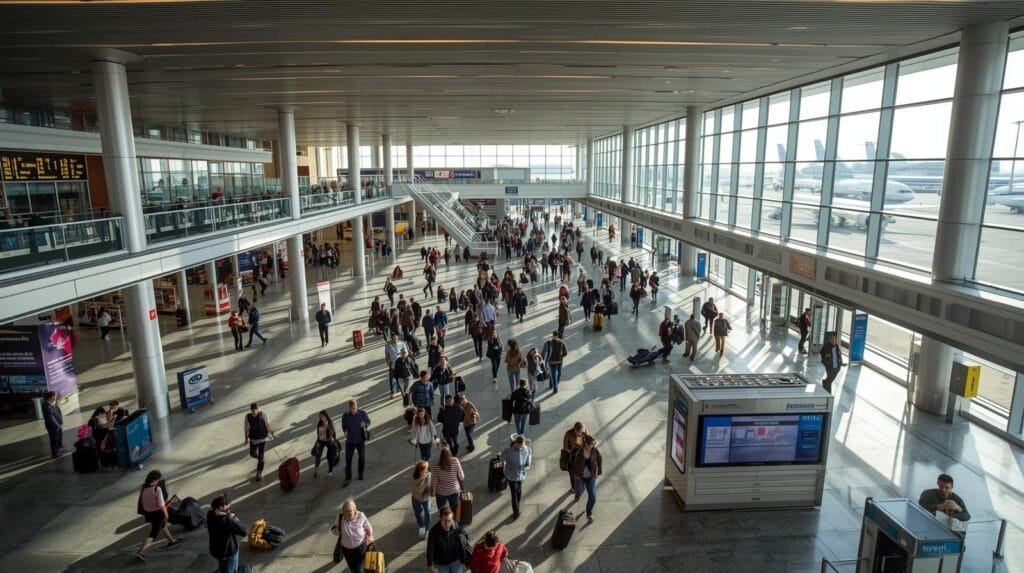
Another common question that consistently asked high in online search is: What is happening at JFK Airport today? In 2025, the answer is simple: a lot.
JFK is undergoing an unprecedented, multi-terminal reconstruction project that affects everything from terminal frontage to curb management. The redevelopment includes:
- The creation of the brand-new Terminal 6, an entirely modern facility scheduled to open its first gates in 2026.
- Major roadway realignments around Terminal 4, which remains one of the busiest international terminals in the nation.
- The modernization and expansion of Terminals 1 and 8.
- Development of new Ground Transportation Centers (GTCs) designed to streamline how passengers access car services, taxis, shuttles, and ride-share vehicles.
- Extensive construction in arrival and departure zones, resulting in shifting curb access, modified pedestrian walkways, and ongoing lane closures.
Travelers searching for day-of updates are directed to official airport sources such as the Port Authority of New York & New Jersey (PANYNJ) and the A New JFK Redevelopment Program, both of which publish alerts regarding traffic advisories, terminal changes, and construction schedules.
How the Redevelopment Affects Pickup and Drop-Off in 2025
While the long-term upgrades will significantly enhance the passenger experience, the short-term reality is that pickup and drop-off rules have changed dramatically across multiple terminals. These updates have created a new landscape for private car services, taxi fleets, and ride-share drivers.
Drop-Off Areas: Still Curbside, But With Added Delay
For departing passengers, curbside drop-off remains largely unchanged at terminals such as Terminal 5 and Terminal 7. Travelers can still be dropped at the departures level, and most car services continue to enjoy direct access.
However, construction congestion is unavoidable. Lane closures, temporary routing cones, and dynamic traffic redirection mean that passengers should plan to arrive earlier than usual. Even when using a JFK car service, it is recommended to budget an extra 10–20 minutes for roadway delays, particularly during rush hour or holiday travel periods.
Pickup Areas: The Most Significant Change
While drop-off remains mostly intact, pickup zones have undergone major restructuring, particularly for ride-shares and non-pre-arranged for-hire vehicles.
Terminal 4: Redirected to Lot 66 During Most Hours
At Terminal 4, the airport’s busiest international arrivals hub, ride-share vehicles such as Uber and Lyft, along with most for-hire vehicles, are no longer permitted to pick up passengers curbside between approximately noon and 2 a.m. Instead, these vehicles are required to stage at Lot 66, a designated off-site pickup area accessible only via a free airport shuttle.
This shift adds an additional 15 to 30 minutes to most passengers’ post-flight commute. The process involves exiting the terminal, locating the shuttle signage, taking the shuttle to the external lot, and meeting the vehicle there.
By contrast, professional, pre-arranged JFK car service providers often retain access to more direct pickup lanes, depending on their licensing and terminal permissions. This explained why many travelers, especially frequent flyers, business professionals, and international visitors, increasingly prefer pre-arranged transportation over ride-share options in 2025.
Terminals 5 and 7: Pickup Relocated to Howard Beach Station
At both Terminal 5 and Terminal 7, rideshare pickups have been redirected to the Howard Beach AirTrain Station, requiring passengers to board the AirTrain from the terminal to meet their driver. There is currently no curbside pickup permitted for ride-shares during the construction windows.
Once again, the exception lies with pre-booked black car and limo services, many of which maintain terminal-front privileges under specific contracts or licensing arrangements. This differentiation is becoming one of the strongest competitive advantages for luxury car services at JFK.
Why Pre-Arranged Car Services Now Have a Major Advantage
The Port Authority’s updated 2025 regulations specify that ground transportation must be pre-arranged unless the vehicle is a licensed NYC taxi. Enforcement of this rule has increased during the redevelopment period to reduce curbside congestion and improve passenger safety.
This means:
- Walk-up solicitation is prohibited.
- Unauthorized ride-hailing or “gypsy cabs” are removed.
- Legitimate limo, black-car, and executive services enjoy enhanced credibility.
- Travelers are encouraged to book a car in advance if they want efficient, seamless curbside pickup.
In effect, the construction disruption has strengthened the appeal of premium transportation. For many passengers, the ability to avoid shuttle buses, avoid AirTrain transfers, and meet a chauffeur directly at the terminal is worth the added convenience cost.
The Impact on Travelers and Car-Service Businesses in 2025
The redevelopment is not merely a construction inconvenience, it is reshaping customer expectations and shifting market behavior.
Passengers now prioritize reliability, clarity, and speed. Instead of waiting in long rideshare queues or navigating confusing shuttle pathways, travelers increasingly value professional services that provide:
- Real-time flight monitoring
- Chauffeur meet-and-greet assistance
- Direct curbside pickup (where permitted)
- Clear instructions tailored to each terminal’s evolving logistics
- Comfortable, private transportation solutions
For businesses offering JFK car service or private airport transfer in NYC, this environment represents an opportunity to clearly differentiate from ride-share services.
The marketing advantage is significant: professional car services can genuinely promise a smoother, faster, and more predictable pickup experience at an airport undergoing constant change.
Practical Recommendations for 2025 Passengers and Operators
Travelers should confirm terminal-specific pickup details before landing, especially at Terminal 4. Arrivals during construction peaks may require longer walks or shuttle transfers, even for those using private transportation. It is wise to add a buffer to travel schedules, particularly for nighttime arrivals.
Operators should ensure their chauffeurs have real-time updates on lane closures, shuttle routes, and pickup restrictions. Drivers should provide passengers with personalized instructions, including whether to expect curbside pickup or whether temporary restrictions require meeting at a different designated zone.
Final Analysis: Turning JFK Construction Into a Customer Experience Advantage
JFK Airport’s redevelopment is a long-term investment in New York’s global connectivity. However, its immediate impact is unmistakable: shifting roadways, changing pickup zones, modified traffic flows, and evolving regulations. These changes affect every traveler arriving at the airport and every transportation provider working within it.
Yet within this disruption lies a significant competitive advantage for professional transportation companies. While rideshares struggle with off-site lots and shuttle dependencies, pre-booked services can offer clarity, reliability, and comfort, qualities that matter deeply during construction-heavy years.
For travelers seeking efficiency, seamless arrival, and a stress-free transition from air to ground, a JFK car service remains the most dependable and convenient choice in 2025. And for car-service operators, this moment is an opportunity to elevate their service offering, reinforce customer trust, and position themselves as the premium alternative in a rapidly changing airport environment.
By VIP Black’s Car Services
Licensed Chauffeured Transportation in Connecticut & New York
Committed to raising industry standards through safety, transparency, and integrity in every journey