

Introduction
Harbor Point Stamford traffic no longer deteriorates slowly across a commute. It fails at defined moments, on specific blocks, and for repeatable reasons.
On most weekdays, the first breakdown appears shortly before 8:00 AM, when residential departures from Harbor Point apartments collide with service vehicles and early office arrivals inside a street grid that has no surplus curb capacity left to absorb error.
Drivers entering Harbor Point from Washington Boulevard often notice the shift before congestion shows on navigation apps. Canal Street begins stacking earlier than it did even a year ago, while Pacific Street may still appear passable. By late afternoon, the pattern reverses. Pacific Street holds congestion longer than expected, not because of overall volume, but because brief curb holds near residential entrances remove entire lanes from circulation. Vehicles continue moving, yet access collapses.
These conditions reflect density reaching a tipping point. Harbor Point apartments no longer add traffic in waves tied to office schedules. They generate continuous turnover. In response, the City of Stamford, through the Harbor Point Infrastructure Improvement District, has shifted its focus away from smoothing flow and toward containing disruption by adjusting curb markings, tightening enforcement timing, and limiting how long vehicles are tolerated in functional travel lanes.
Source: Harbor Point Infrastructure Improvement District, City of Stamford.
What follows is not a commuter overview or a visitor guide. It reflects repeated weekday exposure inside Harbor Point Stamford, where delays happen after arrival, familiar drop-off habits fail, and curb access now defines traffic outcomes more than speed ever did.
Key Points
- Harbor Point Stamford traffic is now driven mainly by residential turnover tied to Harbor Point apartments
- Congestion builds from curb access conflicts rather than lane capacity
- Stamford parking enforcement activity is more time-specific and location-specific
- Navigation apps misread Harbor Point conditions once curb space disappears
- Executive arrival delays occur most often after entering the district, not before
Why Harbor Point Stamford Traffic Shifted in 2026
What changed inside Harbor Point Stamford was not raw volume. It was the location of failure points.
Traffic now breaks at predictable times and blocks rather than degrading across the entire area. Between Canal Street, Pacific Street, and Commons Park North, residential departures begin compressing shortly before 7:30 AM. Service vehicles and early office arrivals enter the same corridors at the same time. Because blocks are short and curbs are shallow, a single stopped vehicle removes an entire travel lane.
Once curb access fails, movement does not slow. It locks. Recovery does not begin when vehicles start moving again, but when the residential departure window closes. Weather conditions and regional Stamford congestion matter less here than curb availability inside Harbor Point itself.
This shift did not come from a single closure or construction phase. It followed Harbor Point apartments reaching sustained weekday occupancy that the street grid was never designed to handle continuously.
How Harbor Point Apartments Became the Primary Traffic Generator
Harbor Point apartments now account for the most consistent and disruptive vehicle movement inside Harbor Point Stamford, surpassing office traffic in both frequency and duration.
Morning pattern (approximately 7:15–8:45 AM):
- Residential departures
- Ride-hail pickups
- Short curb holds that block travel lanes
Afternoon and evening pattern (approximately 4:30–7:00 PM):
- Residential returns
- Guest arrivals
- Waterfront dining traffic overlapping residential entrances
Throughout the day:
- Food delivery
- Maintenance access
- Service vehicles repositioning repeatedly
Residential traffic behaves differently from office traffic. It competes for curb space, not speed. Vehicles stop briefly, reposition, and double back, removing functional roadway capacity without triggering upstream congestion indicators. This is why Harbor Point apartments traffic produces sudden backups even when lanes appear open and why drivers unfamiliar with the area misjudge conditions until access fails directly in front of them.
Harbor Point Stamford Movement Anchors
Several local anchors shape how traffic behaves inside Harbor Point Stamford.
| Local Anchor | Location Context | Traffic Effect |
|---|---|---|
| Stamford Transportation Center | Northwest of Harbor Point | Commuter spillover during peak rail arrivals |
| Harbor Point Boardwalk | Eastern waterfront edge | Evening and event-driven circulation |
| Commons Park North | Central gathering area | Dead-end congestion during events |
| Washington Boulevard | Primary approach corridor | Early stacking before district entry |
These anchors connect Harbor Point traffic to broader Stamford movement rather than isolating it as a standalone issue.
Streets Where Access Behavior Has Changed
Experienced executive drivers now treat several Harbor Point Stamford streets as timing-sensitive zones.
| Street | Observed Issue | Typical Window |
|---|---|---|
| Canal Street | Residential drop-offs conflict with service vehicles | 7:30–9:00 AM |
| Pacific Street | Short curb depth leads to rapid queueing | 4:30–6:30 PM |
| Commons Park North | Vehicles drawn into dead-end congestion | Event evenings |
These patterns repeat with enough consistency to plan around. Ignoring them leads to predictable failure.
Parking Enforcement Patterns Inside Harbor Point Stamford
Parking enforcement inside Harbor Point has shifted from discretionary tolerance to duration-based monitoring.
- Short curb holds near Harbor Point apartments entrances now draw attention quickly
- Enforcement presence increases once residential departure windows open
- Hazard lights no longer delay citation activity
This aligns with Stamford’s broader curb management approach in dense districts, where turnover governs enforcement behavior rather than intent.
Source: City of Stamford Parking Services
Why Navigation Apps Misrepresent Harbor Point Traffic
Navigation apps route vehicles based on movement speed. They do not account for stopping feasibility.
- Apps guide drivers into streets with no available curb access
- Real-time traffic data ignores enforcement presence and curb conflict
- Routing logic fails once a vehicle must stop rather than pass through
Inside Harbor Point Stamford, the challenge is not reaching the destination street. It is finding legal, functional access once there.
Morning vs Evening Traffic Behavior in Harbor Point Stamford
Traffic behavior inside Harbor Point changes by purpose rather than volume.
Morning conditions
- Residential departures dominate
- Service and delivery vehicles overlap
- Enforcement activity increases after 7:30 AM
Evening conditions
- Residential returns combine with guest arrivals
- Short stops compound quickly
- Waterfront foot traffic increases vehicle circulation
Treating these windows as interchangeable leads to avoidable delays.
Office Buildings and Harbor Point Apartments Sharing the Same Curb
Curb competition now defines Harbor Point access.
- Office arrivals compress tightly by schedule
- Harbor Point apartments generate continuous access demand
- Building security procedures vary by property
Without coordination, brief overlaps overwhelm curb capacity long before lanes fill.
How Executive Schedules Are Being Disrupted
Most Harbor Point delays occur after entering the district.
- Vehicles reposition multiple times searching for curb access
- Passengers are dropped farther from entrances than planned
- Arrival windows close while curb space remains blocked
This creates the impression of worsening traffic when the underlying issue is access compression.
Field Observation from the Driver’s Seat
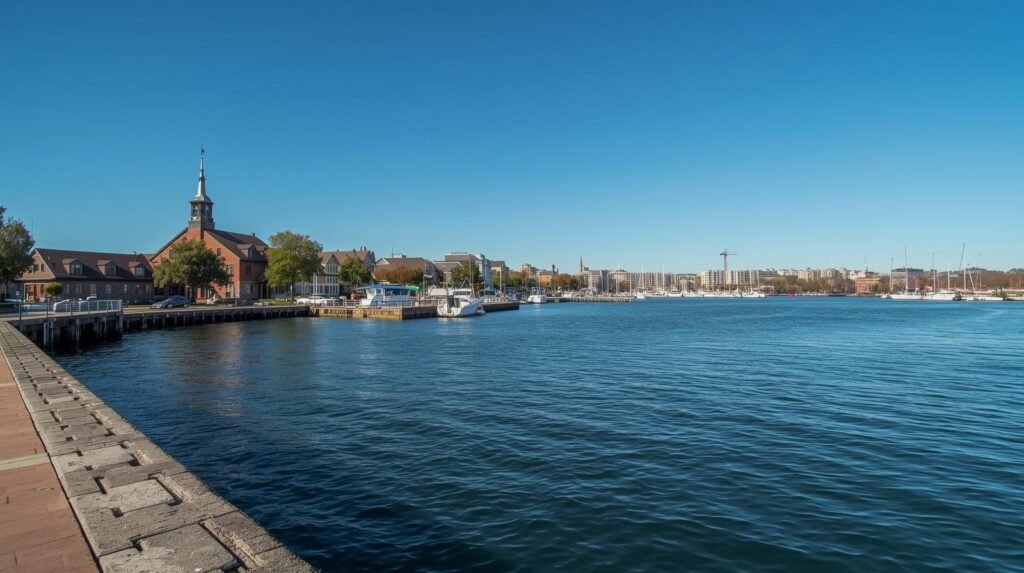
During weekday mornings, passengers arriving at Harbor Point apartments often assume delays occurred along I-95 or downtown Stamford. In practice, most lost time happens inside Harbor Point itself.
Streets appear open until curb access disappears, at which point vehicles stall in place. This surprise reaction repeats most often between 7:45 and 8:15 AM, when residential departures peak.
What Experienced Drivers Are Doing Differently
Seasoned local drivers have adjusted behavior rather than relying on routing tools.
- Staging vehicles outside the Harbor Point core during peak windows
- Entering residential streets only after curb availability is confirmed
- Coordinating arrival timing with building staff
These adjustments reduce enforcement exposure and missed arrivals.
Resident Feedback Around Harbor Point Apartments
Public commentary reflects the same friction drivers experience. Resident discussions and visitor feedback frequently reference congestion near residential entrances, confusion around stopping rules, and difficulty receiving guests during peak periods. While not operational guidance, this feedback reinforces the scale of daily movement pressure placed on a compact street grid.
Short-Term Outlook for Harbor Point Stamford Traffic
Near-term conditions are unlikely to loosen.
- Residential occupancy remains high
- No significant roadway expansion is scheduled
- Curb management and enforcement will continue tightening
The Harbor Point Infrastructure Improvement District continues monitoring conditions, with current measures focused on management rather than expansion.
Chauffeur’s Pro Tip: Timing Beats Routing in Harbor Point Stamford
The most effective adjustment inside Harbor Point Stamford is timing discipline.
- Avoid entering Canal Street and Pacific Street during residential peak windows without confirmed curb access
- Stage vehicles outside the district and enter only when clearance is available
- Treat Harbor Point apartments entrances as controlled zones during weekday peaks
This approach reduces arrival failures more reliably than rerouting.
FAQs
Why is traffic near Harbor Point apartments heavier now than in previous years?
Residential occupancy now produces continuous daily movement overlapping office, visitor, and service traffic.
Are parking tickets increasing in Harbor Point Stamford?
Yes. Enforcement now prioritizes curb duration and positioning near residential entrances.
Does time of day matter more than route choice in Harbor Point?
Yes. Most access failures occur during predictable residential departure and return windows.
Conclusion
Harbor Point Stamford traffic did not change suddenly. It shifted as residential density reached a level that existing streets and curbs were never designed to absorb continuously. Harbor Point apartments now define daily movement patterns, while city enforcement and curb adjustments attempt to manage pressure rather than remove it.
Executives, residents, and operators who recognize this shift experience fewer disruptions. Those relying on historical habits encounter friction that feels unexpected but follows a consistent logic. Inside Harbor Point Stamford, informed timing and access awareness now matter more than speed or route selection.
Authored by:
VIP Black’s Car Services
Committed to raising industry standards through safety, transparency, and integrity in every journey
Stamford, Connecticut.