
FAA Orlando Flight Ground Stop
What’s Happening and Why It Matters
When you search for “FAA Orlando flight ground stop”, you’re tapping into a major story that affects tens of thousands of travellers. In short: the Federal Aviation Administration (FAA) has ordered a reduction in flights at 40 major U.S. airports, including Orlando International Airport (MCO), as the agency deals with staffing pressures from the ongoing U.S. government shutdown.
Below, we’ll unpack what the FAA Orlando flight ground stop really means, why it’s happening now, how it ties into other issues like the Newark Liberty International Airport flight problems and drone/flight restrictions in New York, and what travelers, and private-car or black-car limo services, should know.
We’ll also answer some FAQs like What does FAA stand for in flight?, What is FAA flight service?, What is an FAA flight restriction?, What is an FAA flight review?, and How to get FAA flight attendant certificate.
Why the “FAA Orlando flight ground stop” Happened
The term “ground stop” usually means that flights destined for a particular airport aren’t permitted to depart or the arrivals are held on the ground until some condition is met.
In this instance, the FAA has explained that the systemic pressure caused by the federal shutdown is forcing it to cut back roughly 10 % of flights at key airports starting this week.
For Orlando, that means the “FAA Orlando flight ground stop” language reflects part of a planned phased reduction: first a ~4 % drop, ramping up to ~10 % depending on staffing levels.
The root causes:
- The U.S. federal government shutdown (which began 1 Oct 2025) has furloughed many non-essential workers and left others unpaid, including personnel at the FAA and controllers.
- Air traffic controller fatigue and shortages are now triggering safety concerns and capacity constraints.
- The FAA wants to avoid cascading delays, delays turning into cancellations, or worse, safety incidents due to overworked staff.
- By reducing flights (the “ground stop” language is a way of describing one of the throttling mechanisms), they are proactively managing capacity.
So yes, the FAA Orlando flight ground stop is part of this broader effort to keep air travel safe and orderly under unusual conditions.
How the Cuts Are Being Structured
- Across 40 of the highest-volume U.S. airports, flight volume will be cut by about 10 % beginning this Friday.
- For Orlando, a 4 % cut has been announced already, moving toward 10 % depending on staffing levels.
- The FAA is not specifying each airport’s exact reduction schedule publicly, but has emphasized that safety dictates the step-down.
Why This Impacts Limo/Private Car/Black-Car Services Too
While at first glance this looks like something purely for airlines and airports, private-car, black-car, and limo services need to pay attention:
- When flights get delayed, cancelled or subject to ground stops, passengers often turn to alternative transport modes (ground, train, regional flights), potentially increasing demand for private rides.
- Airport pickup/drop-off timing becomes more volatile: a ground stop or delay means a limo booked for arrival could face waiting time, or a pickup may need to be rescheduled.
- Black-car operators serving terminals at airports affected by these cuts (like Orlando) may need to coordinate more closely with flight status updates, anticipate buffer time, or offer alternative routing.
- Car services may also see shifts in passenger volumes: e.g., passengers transferring between airports if their original flight is cancelled, that could mean extra downtown rides or shifts in where they board the car.
- Communication matters: both for end-travelers and for businesses arranging ground transport, the “FAA Orlando flight ground stop” event signals that timing is uncertain, building buffer time into bookings is wise.
Related Issues: FAA Flight Delays & Newark Airport Flight Issues
FAA flight delays
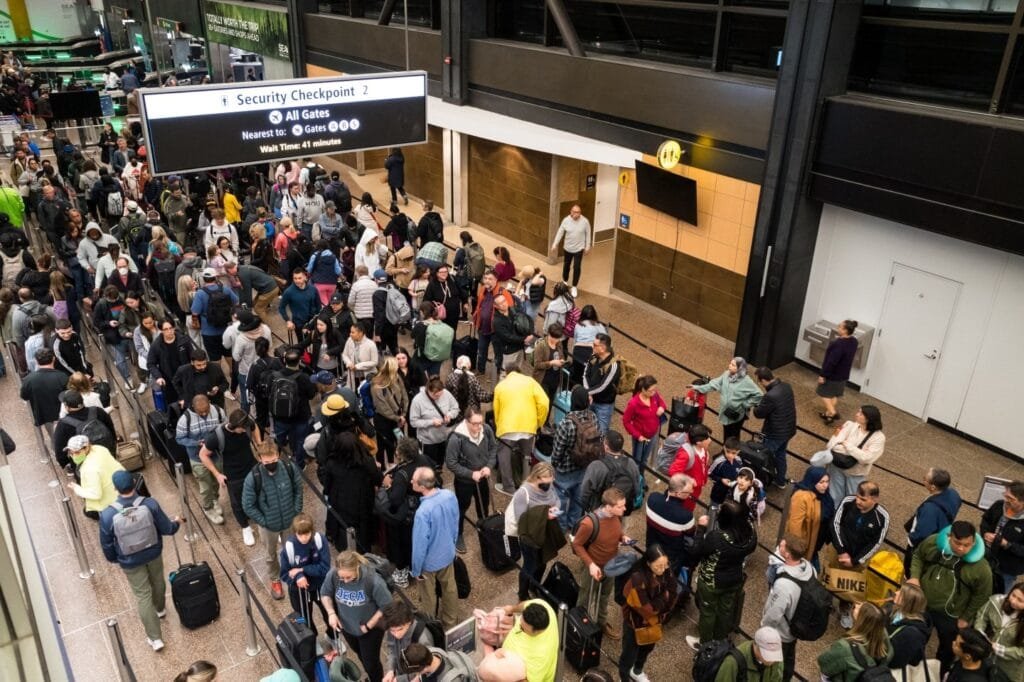
Delays are one of the direct consequences of this situation. The term “FAA flight delays” covers the broad category of flights delayed because the FAA has limited capacity, or ground stops/holds are in effect, or staffing issues affect traffic flow. For example:
- According to one report, an average of 68 minutes delay occurred at Newark.
- The Business Insider article noted that staffing problems account for 53 % of delays in October (post-shutdown) compared to ~5 % before.
- The label “FAA flight delays” helps travelers search for this, so using that as a keyword aligns with how people track travel headaches.
FAA Newark Airport Flight Issues
The airport at Newark has been under special scrutiny for months. The FAA imposed flight caps and ground stop programs there long before the shutdown, because of controller shortages, aging systems, and construction.
We now see those problems compounding with the shutdown environment:
- The “FAA Newark airport flight issues” narrative is one of constrained capacity, repeated delays, and active restrictions imposed by the FAA.
- The broader “FAA Orlando flight ground stop” echoes similar issues elsewhere, showing this is not isolated to Newark but now scaling nationally across major hubs.
New York Drone Flight Restrictions & FAA
Separately, drone and other unmanned-aircraft restrictions in the New York area have been enacted by the FAA. While less directly tied to the flight-cuts story, they are part of the broader FAA oversight and capacity challenge and link into travelers’ concerns and service logistics near major hubs. For example, flights in and out of NYC area airports may face additional constraints or rerouting due to drone-airspace issues. So using the keyword “New York drone flight restrictions FAA” helps tie the content into this broader ecosystem of FAA oversight and travel disruption.
FAQs: Understanding the Terms.
Below are useful definitions to enhance clarity for readers and travellers.
What does FAA stand for in flight?
“FAA” stands for the Federal Aviation Administration, the U.S. federal agency within the Department of Transportation responsible for regulating civil aviation and operating the national air traffic control system.
What is FAA flight service?
That refers to services provided by the FAA’s Flight Service unit, which provides pilots with weather and aeronautical information (briefings), flight plans, in-flight advisories, and handles notices to air missions (NOTAMs).
What is the most common FAA violation?
In aviation, common FAA violations often revolve around things like failure to abide by maintenance or pilot currency requirements, airspace restrictions, or unauthorized flight operations. While no single “most common” violation is neatly quantified in this context, many enforcement actions by the FAA focus on pilot currency, aircraft maintenance, and operational compliance.
What is an FAA flight restriction?
A flight restriction (or temporary flight restriction, TFR) is a limitation placed by the FAA on certain airspace including altitude, route, or aircraft type, often for safety, security, VIP movement, or temporary hazard reasons. For example, drone-free zones near major airports or special events.
Source: Wikipedia
What is an FAA flight review?
A flight review is a biennial proficiency check required for certain general aviation pilots under 14 CFR 61.56, typically at least one hour of flight plus one hour of ground instruction, for the purpose of reviewing knowledge and safe pilot performance.
How to get FAA flight attendant certificate
Although this is less directly tied to this travel-disruption story, someone looking at certifications might wonder: a flight attendant certificate in the U.S. is typically managed by airlines (under FAA oversight) rather than directly issued by the FAA to every individual. Common steps include: meeting age/education requirements, completing airline-specific training programs certified by the FAA, passing medical/fit requirements, obtaining a Certificate of Demonstrated Proficiency, and completing recurrent training. Regularly checking the FAA website (https://www.faa.gov/) is a smart move.
Practical Advice for Travellers, Car Services & Airports
Given the FAA Orlando flight ground stop and other flight-cut actions:
For travellers heading to Orlando (or affected hubs):
- Before booking or beginning your journey, check for delays/cancellations: many systems are going to be dynamic.
- Build in extra buffer time for transfers, pickups, or pre-flight arrival.
- If you’re using a limo or black-car service, let the provider know you’re aware of potential delays, they may adjust pickup/drop-off accordingly.
- Stay in touch with your airline via alerts, many carriers will proactively reschedule or refund if flights are cancelled due to these systemic cuts.
- Consider alternate travel (ground transport, alternate airports) if your itinerary is flexible and you want to anticipate disruption.
For limo/private-car/black-car operators:
- Monitor airports affected by the cuts (including Orlando, Newark, and others) and coordinate with dispatchers about potential delays or ground stops.
- Ensure drivers are aware of potential waiting time and tardy arrivals. When flights are delayed, passengers may show up later than booked.
- Consider contracts or service terms that allow for flexibility when “FAA flight delays” or “FAA Orlando flight ground stop” events happen.
- Communicate proactively with customers: e-mail or SMS updates, contingency routing (e.g., alternate airport drop-off), increased buffer time, etc.
For airports and airlines:
- Airlines will likely reduce schedules proactively to match FAA-mandated cutbacks. Expect fewer flight options and more consolidation at major hubs.
- Ground operations (tarmac, taxiways, gate management) will feel ripple effects when flights are pushed back or cancelled due to FAA restrictions.
- Collaboration with car/limousine services is beneficial: knowing flight changes helps ground transport adjust and avoid waiting costs or mis-bookings.
Broader Context: Why This Matters
This situation is not just a short-term hiccup ~ it reflects structural stress in the U.S. aviation system.
- The shutdown prompted unpaid or furloughed workers in federal aviation roles; that reduces staffing, training, inspections and readiness.
- The FAA is now deliberately reducing flight volume (“10 % across 40 major airports”) in order to ensure safety rather than let delays or staff fatigue produce much worse disruptions.
- Hubs like Newark have already had flight limits in place before the shutdown, indicating this isn’t solely about the shutdown but broader capacity and staffing issues.
- For travellers, businesses, ground services and airports alike, planning must shift from “everything proceeds on schedule” to “expect some friction, build in buffer time, stay flexible.”
Key Takeaways
- The FAA Orlando flight ground stop phrase signals that Orlando International Airport is among the 40 major U.S. airports facing reduced capacity due to the FAA’s response to the federal shutdown and air-traffic-controller staffing pressures.
- The keyword “FAA flight delays” captures the wider pattern of increased delays across U.S. aviation because the FAA is throttling capacity.
- The related keyword “FAA Newark airport flight issues” underscores that major hubs (like Newark) have already been under special restrictions, and the Orlando event is part of this systemic trend.
- The term “New York drone flight restrictions FAA” reminds readers that the FAA’s workload isn’t just flights of large jets, airspace restrictions for drones and unmanned systems add complexity to major hubs.
- Travellers and ground transport services (limousines, black-cars, private rides) must anticipate more disruption, communicate proactively, build extra time into schedules, and monitor status updates.
- From a safety and regulatory perspective, this is a proactive move by the FAA, reducing capacity to maintain safety margins rather than risking uncontrolled delays or worse.
Conclusion
In short: if you’re travelling through Orlando (or major U.S. airports) right now, the FAA Orlando flight ground stop (and sibling events) are real, they’re not clickbait. They reflect a system under pressure.
For the airport traveler, the message is: stay informed, expect possible delay or cancellation, build buffer time, and if you’re using a limo or private car to or from the airport, treat the pickup/drop-off timing as flexible.
For ground transport providers and limo/black-car services: align your operations with the reality of increased variability. Offer flexibility, anticipate delays, maintain open communications with customers, and update your contingency plans.
For airlines and airport operators: while this is disruptive, it is an act of risk management by the FAA. Lean into coordination: ground services, airlines, passengers and regulators all need to operate with cross-communication to absorb the impact.
By VIP Black’s Car Services
Licensed Chauffeured Transportation in Connecticut & New York
Committed to raising industry standards through safety, transparency, and integrity in every journey